Language
 English
 中文简体
中文简体 Español
 русский
 +86-15268315011


Thermoplastic Pavement Marking Material: Composition, Performance, and Buying Guide
A marking crew heats a dry blend of binder resin, pigment, glass beads, and mineral filler to roughly 200°C, extrudes it onto the lane line at a wet-film thickness of about 2 mm, and traffic runs over the line the same afternoon. Thermoplastic pavement marking material has become the default durable marking on highways for a simple reason: measured in cost per service year rather than cost per gallon, it routinely outperforms conventional paint, holding retroreflective service for three to five years where waterborne paint often survives a single season under heavy traffic. Whether a thermoplastic line reaches year five or ravels out in eighteen months depends on three factors: the formulation itself, the pavement it lands on, and the discipline of the application crew. This article covers the composition, the performance numbers that matter, the application practice, and the binder chemistry that ultimately sets service life.
Content
- 1 What a thermoplastic marking compound is made of
- 2 The performance numbers that matter
- 3 Application methods and field discipline
- 4 How thermoplastic compares with the alternatives
- 5 How pavement and traffic shorten or extend the life
- 6 Why binder chemistry decides service life
- 7 What to check before you buy
What a thermoplastic marking compound is made of
A thermoplastic marking is a solid coating, not a paint. At ambient temperature it is a homogeneous dry compound; heated in an oil-jacketed melter, it flows like heavy syrup; and within minutes of being extruded or sprayed onto the road, it cools back into a single coherent film. Hot-applied material is typically placed between about 60 and 125 mils (1.5–3 mm), ten to twenty times thicker than a pass of road paint, and that thickness is the wear budget the marking spends over its service life.
Formulations follow a broadly standard recipe, with each highway specification tuning the ratios:
| Component | Indicative share by weight | Function in the cured film |
|---|---|---|
| Binder resin | 15–20% | Adhesion, flexibility, softening point, and color hold |
| Pigment (titanium dioxide for white, dedicated pigments for yellow) | About 5–10% | Daytime color and compliance with chromaticity limits |
| Glass beads, intermixed | About 20–30% | Embedded retroreflective lenses exposed as the line wears |
| Mineral filler (calcium carbonate, quartz sand) | Balance of the blend, often 40–55% | Film body, cost control, and viscosity management |
| Plasticizer and stabilizers | About 2–5% | Melt flow, low-temperature flexibility, and heat stability |
Glass beads deserve a note because they exist in two populations. Intermixed beads are blended into the compound itself; drop-on beads are applied to the hot surface immediately after placement. The drop-on population delivers initial retroreflectivity, while the intermixed layer is exposed progressively as the binder wears, which is what keeps the line visible in year three. Too many beads, or beads seated too deep, reduce binder-to-bead contact and the film starts to ravel early; too few, and the line dims after one winter.
The performance numbers that matter
Retroreflectivity. Fresh thermoplastic lines on asphalt commonly measure in the range of 300–500 mcd/m2/lux when dry, and many agencies treat roughly 100–150 mcd/m2/lux as the practical replacement threshold for longitudinal lines on high-speed roads. The mechanism is passive: the line only stays retroreflective while the wearing binder continually exposes new bead lenses. A formulation that wears too fast, or that holds beads too tightly, loses retroreflectivity before it loses thickness.
Deformation resistance. On a summer afternoon, dark pavement surfaces can exceed 60°C. The binder's softening point must keep enough headroom above that, or tires pick up the line and markings smear along the wheel path. The same property shows up in the kettle: holding compound at application temperature for a full shift will darken a poorly stabilized blend and change its flow, which is why specifications include a heat-stability requirement.
Low-temperature flexibility and adhesion. The film has to survive freeze–thaw cycling, track with pavement movement, and bond to both asphalt and concrete. A brittle binder cracks along the line within the first winter; weak adhesion peels at the edges where wheel loads concentrate.
Application methods and field discipline
Extrusion (screed) application places the standard thick line; spray methods cover edge lines and wide swaths at lower film weights; ribbon application handles skip lines, symbols, and legends; and profiled thermoplastic adds raised structure for wet-night visibility plus some resistance to snowplow abrasion. Whatever the method, the steps that decide the outcome are the same:
- Sweep and degrease the surface, removing loose material and oil films.
- Confirm the pavement is dry and the surface temperature sits inside the specification window, commonly a minimum around 10°C.
- Prime concrete and heavily oxidized or raveled asphalt with the specified primer; skip this and adhesion fails.
- Melt and hold the compound at the specified temperature, respecting the maximum kettle time so the polymer and pigment do not degrade.
- Extrude at uniform thickness and apply drop-on beads immediately, before the film skins over.
- Open to traffic after cool-down, usually within minutes.
The two surfaces that ruin thermoplastic lines most reliably are fresh, bleeding asphalt, where fat spots rise up and bury the beads, and bare concrete placed without primer. Everything else, including ambient temperature, bead rates, and kettle discipline, is controllable, which is why contractor practice shows up so clearly in warranty performance.
How thermoplastic compares with the alternatives
| Material | Indicative service life on asphalt | Best fit |
|---|---|---|
| Waterborne paint | Roughly 6–18 months under heavy traffic | Large-area annual programs where first cost dominates |
| Thermoplastic | 3–5 years, longer with thick films and intermix beads | Highways and high-wear urban networks that need fast return to traffic |
| Epoxy (two-component) | Roughly 3–5 years | High-traffic corridors equipped with two-component spray gear |
| MMA (cold plastic) | Commonly 4 years or more | Concrete, tight curves, and long-life niche applications |
| Preformed tape | Varies by grade | Intersections, symbols, and short critical lengths at the highest unit cost |
Framed as cost per service year, thermoplastic wins where traffic wear is the limiting factor and lane-closure time is expensive, because the line returns to service in minutes rather than hours. Epoxy and cold plastic compete closely in some regions, and preformed tape remains the practical choice where immediate, uniform retroreflectivity matters more than unit cost. Waterborne paint keeps its role for large annual programs where budgets are set per application rather than per year.
How pavement and traffic shorten or extend the life
Channelized traffic wears wheel-path grooves into the line, studded tires and snowplow blades abrade it, and winter chains tear chunks from the edges, which is why profiled and thicker applications exist for plow regions. Climate adds chemical stress: sunlight and oxygen attack the unsaturated portions of the binder and embrittle the film, so a marking that is mechanically sound can still lose flexibility and adhesion after two summers of UV exposure. Surface type interacts with all of this, since porous or flushed asphalt changes how beads embed, and concrete demands a primer to form a bond the film can keep.
Why binder chemistry decides service life
The binder is only 15–20% of the blend by weight, but it dictates adhesion, flexibility, softening point, and color hold, in other words nearly every row in the tables above. Conventional hot-applied formulations rely on hydrocarbon resins with plasticizer, while performance-graded compounds add elastomeric modifiers to absorb traffic stress and resist low-temperature cracking. Styrenic block copolymers are the most established family for this role, and the same chemistry is used to elasticize bitumen in road construction; readers who want that side of the picture can see how the polymer functions in asphalt modification.
Zhongli styrene-butadiene block copolymer (SBS)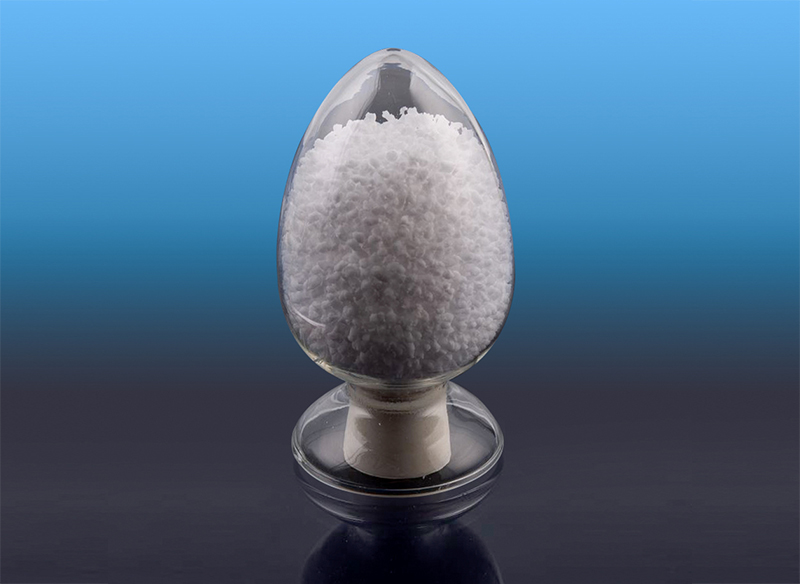 Styrene-Butadiene Block Copolymer (SBS) for Binder FormulationsA styrenic thermoplastic elastomer combining plastic processability with rubber-like elasticity, widely used in asphalt modification, adhesives, and polymer modification. It suits marking binder applications needing adhesion, flexibility, and low-temperature performance.View Product →
The distinction that matters most in a marking binder is hydrogenation. Unhydrogenated SBS carries unsaturated bonds in its rubber midblock, and those are the points UV and oxygen attack first and the points that break down fastest at kettle temperatures. Hydrogenating the midblock produces SEBS, which holds color and viscosity far better through a full day at application temperature and resists embrittlement outdoors.
Zhongli hydrogenated styrene-butadiene block copolymer (SEBS)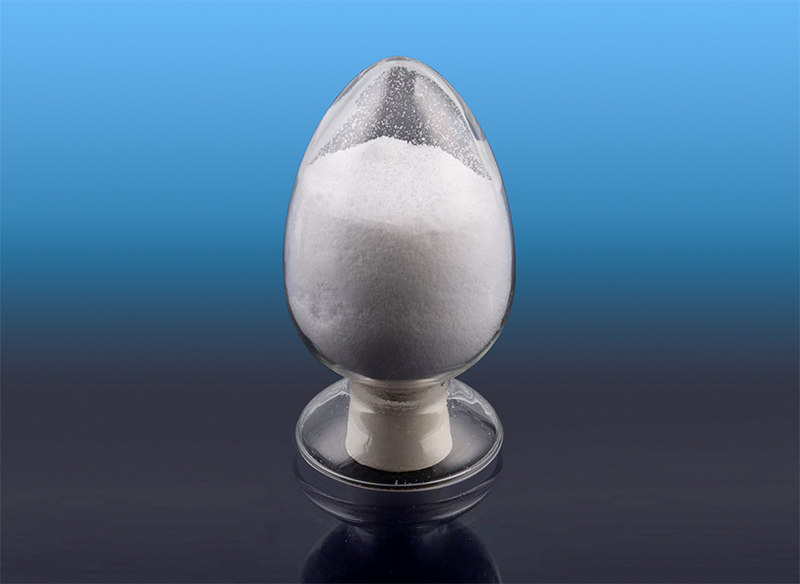 Hydrogenated Styrene-Butadiene Block Copolymer (SEBS)Produced by hydrogenating SBS, SEBS resists UV and oxidative degradation while retaining color and viscosity at application temperatures. Its aging resistance and compatibility make it valuable for durable, weather-exposed road marking binder compounds.View Product →
For a formulation team the practical consequences are specific: hydrogenated grades give a wider processing window and better long-term flexibility, and the background on how SBS resists UV, oxidation, and environmental degradation explains exactly why. Batch-to-batch consistency in melt viscosity and softening point matters as much as the nominal grade, because applicator equipment is calibrated to a narrow flow window. That is where a dedicated polymer producer earns its place on the project: Zhongli Technology runs DCS-controlled hydrogenation units with eight inspection checkpoints from raw material intake to shipment, so compounders sourcing SBS or SEBS for road-related formulations are buying defined, repeatable melt behavior rather than a generic resin.
What to check before you buy
Procurement questions are most useful when they are specific. Before committing to a supplier or a formulation, ask for:
- Written compliance with the governing specification, AASHTO M249 or the state DOT equivalent, rather than a generic thermoplastic grade label.
- Softening point and melt-flow data batch to batch, since applicator equipment is calibrated to a flow window.
- Pigment type and color tolerance against the federal white and yellow chromaticity limits.
- Intermix bead percentage, and whether the beads are coated for moisture resistance.
- Heat stability data showing how long the compound holds color and viscosity at application temperature.
- Packaging, storage conditions, and shelf life of the compound.
- Support for a trial section, with retroreflectivity readings taken after the first winter, before a network-wide rollout.
Thermoplastic pavement marking material rewards buyers who treat it as an engineered system: a binder package with defined thermal and aging properties, a bead population matched to the wear rate, and an application window respected in the field. The resin and modifier chemistry decides whether a line is a four-year asset or an annual repaint, and a short trial section with measured retroreflectivity will tell you which one you have bought.