Language
 English
 中文简体
中文简体 Español
 русский
 +86-15268315011


Styrene-Butadiene Block Copolymer: Properties, Uses, and Types
Styrene-butadiene block copolymer (SBC) is a thermoplastic elastomer that combines the rigidity of polystyrene with the flexibility of polybutadiene into a single material. It behaves like rubber at room temperature but can be processed like a thermoplastic when heated, eliminating the need for vulcanization. This makes it one of the most commercially significant polymer families in use today, found in everything from road asphalt and shoe soles to medical tubing and adhesive tapes.
Content
How the Block Structure Defines Material Behavior
The defining characteristic of styrene-butadiene block copolymers is their segmented molecular architecture. Unlike random copolymers where styrene and butadiene units are distributed unpredictably along the chain, block copolymers arrange these units into discrete, ordered sequences. The most common configuration is a triblock structure, written as polystyrene-polybutadiene-polystyrene, or simply S-B-S.
In this arrangement, the polystyrene end blocks are physically incompatible with the polybutadiene midblock. At room temperature, the styrene blocks cluster together into hard domains that act as physical crosslinks, while the butadiene midblocks form a continuous soft matrix that provides elasticity. Because these crosslinks are physical rather than chemical, they dissolve when heat is applied, allowing the material to flow and be reprocessed. This is the fundamental mechanism behind its thermoplastic elastomer behavior.
The styrene content typically ranges from 20 to 40 percent by weight in commercial grades. Higher styrene content increases hardness and tensile strength but reduces elasticity. Lower styrene content produces softer, more rubber-like grades with greater elongation at break.
Primary Types of Styrene-Butadiene Block Copolymers
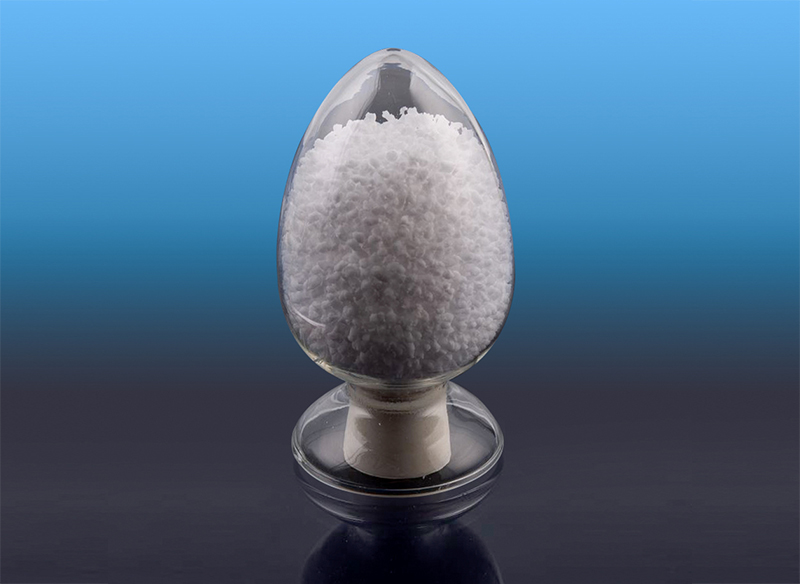
Several distinct block copolymer architectures are produced commercially, each offering a different balance of properties. The two most important are SBS and SEBS, though SIS and SIBS grades also serve specialized roles.
SBS: Styrene-Butadiene-Styrene
SBS is the original and most widely produced grade. It offers excellent elasticity, good processability, and strong adhesion properties at a relatively low cost. Its main limitation is the presence of double bonds in the polybutadiene midblock, which makes it susceptible to oxidative degradation and UV aging over time. SBS is primarily used in applications where outdoor weathering is limited or where the material is blended with other substances such as bitumen.
SEBS: Styrene-Ethylene-Butylene-Styrene
SEBS is produced by hydrogenating SBS, which saturates the double bonds in the midblock and converts it from polybutadiene to a poly(ethylene-butylene) structure. This dramatically improves thermal stability, UV resistance, and chemical resistance. SEBS retains its elastic properties up to approximately 150 degrees Celsius, compared to around 80 degrees Celsius for SBS. The tradeoff is higher cost and slightly reduced adhesive tack.
SIS: Styrene-Isoprene-Styrene
SIS replaces the butadiene midblock with polyisoprene. The result is a softer, tackier material with excellent low-temperature flexibility. It is widely used in pressure-sensitive adhesive formulations, particularly for medical tapes and labels, where aggressive tack and skin compatibility are priorities.
| Grade | Midblock | Max Service Temp | UV Resistance | Typical Use |
|---|---|---|---|---|
| SBS | Polybutadiene | ~80 C | Low | Asphalt, footwear, adhesives |
| SEBS | Poly(ethylene-butylene) | ~150 C | High | Medical, automotive, wire insulation |
| SIS | Polyisoprene | ~65 C | Low | Pressure-sensitive adhesives, labels |
Key Physical and Mechanical Properties
Styrene-butadiene block copolymers occupy a performance space that neither pure thermoplastics nor conventional vulcanized rubbers can easily fill. Understanding their specific property profile helps engineers select the right grade and formulation for a given application.
Elasticity and Recovery
SBC materials exhibit high elongation at break, typically between 400 and 800 percent depending on grade and formulation. More importantly, they recover their original dimensions after deformation without permanent set, which is the defining requirement for elastic applications such as waistbands, gaskets, and flexible connectors.
Hardness and Modulus
Hardness in SBC grades is measured on the Shore A scale and ranges from approximately 20 Shore A for very soft formulations to around 95 Shore A for stiff compounds. This wide range is achieved by adjusting styrene content, molecular weight, and the addition of extender oils or reinforcing fillers. For comparison, a standard rubber band measures roughly 25 Shore A while a hard hat plastic is typically 100 Shore D.
Tensile Strength
Neat SBS triblock copolymers can achieve tensile strengths of 20 to 35 MPa, which is competitive with many vulcanized rubbers without requiring crosslinking chemistry. SEBS grades achieve similar tensile values while also maintaining these properties at elevated temperatures.
Transparency
Many SBC grades are naturally transparent or translucent because the phase-separated domains are smaller than the wavelength of visible light. This is a useful property in packaging films, medical tubing, and toy manufacturing where visual clarity combined with flexibility is required.
Major Industrial Applications
Styrene-butadiene block copolymers are used across a remarkably broad range of industries. Their combination of elasticity, processability, and formulation flexibility makes them a preferred base material in several large-volume markets.
Bitumen Modification for Road Paving
This is the single largest application of SBS globally. Adding 3 to 7 percent SBS by weight to bitumen significantly improves the performance of asphalt pavements. SBS-modified bitumen resists rutting at high summer temperatures, prevents cracking at low winter temperatures, and extends pavement service life by an estimated 30 to 50 percent compared to unmodified bitumen. Countries with extreme temperature variation, including the United States, Canada, and much of northern Europe, have adopted SBS-modified bitumen as a standard specification for high-traffic roads.
Footwear Soles and Components
SBS is extensively used in shoe sole compounds because it provides grip, cushioning, and abrasion resistance at lower cost than natural rubber. It is easily compounded with fillers and oils to achieve specific hardness and density targets, and it bonds well to both upper materials and adhesives. Lightweight foamed SBC compounds are also used in midsoles for athletic footwear.
Adhesives and Sealants
SBC-based hot melt adhesives dominate the packaging, nonwoven hygiene product, and bookbinding markets. The material dissolves readily in aliphatic solvents and melts cleanly at temperatures between 150 and 180 degrees Celsius, enabling high-speed automated application. In hygiene products such as disposable diapers, SIS-based elastic attachment adhesives are used to bond elastic strands to nonwoven substrates while maintaining stretch recovery.
Medical and Healthcare Products
SEBS grades meet the biocompatibility requirements for many medical applications. They are used in intravenous tubing, stoppers, catheter components, and overmolded grips for surgical instruments. SEBS withstands steam sterilization at 121 degrees Celsius and is compatible with gamma irradiation sterilization without significant degradation, which is a critical requirement for single-use medical devices.
Polymer Modification and Compatibilization
SBC materials are added in small amounts to engineering polymers to improve impact resistance. For example, adding 5 to 15 percent SEBS to polypropylene significantly increases its notched impact strength at low temperatures, which is important in automotive bumper systems and cold-climate packaging. SBC also acts as a compatibilizer in polymer blends, reducing interfacial tension between immiscible polymer phases and improving blend morphology.
Processing Methods and Formulation Considerations
One of the practical advantages of SBC materials is their compatibility with standard thermoplastic processing equipment. No special vulcanization presses or batch mixers are required.
- Injection molding: SBC compounds are processed at melt temperatures between 180 and 230 degrees Celsius depending on grade. Mold temperatures are typically kept low, around 20 to 40 degrees Celsius, to promote rapid solidification and cycle time efficiency.
- Extrusion: SBC is extruded into films, sheets, profiles, and tubing. For film applications, cast extrusion produces better optical clarity than blown film, though blown film offers better balanced mechanical properties in the machine and transverse directions.
- Hot melt compounding: In adhesive production, SBC pellets are dissolved in tackifier resins and plasticizer oils at elevated temperatures to produce the final adhesive formulation. Typical formulations contain 15 to 30 percent SBC, 30 to 50 percent tackifier, and 20 to 40 percent oil.
- Solvent solution processing: For coating and thin film applications, SBC is dissolved in solvents such as toluene or cyclohexane and applied by knife coating, spray, or dip methods. Solvent-based processing allows precise film thickness control down to a few microns.
A key formulation variable is extender oil selection. Naphthenic and paraffinic mineral oils selectively swell the polybutadiene or polyisoprene midblock without disrupting the polystyrene hard domains, effectively softening the material and reducing cost without substantially degrading elastic recovery or tensile properties.
Limitations and How They Are Managed
Despite their broad utility, styrene-butadiene block copolymers have well-documented limitations that must be addressed in product design and formulation.
Thermal Ceiling
SBS loses its crosslink network above the glass transition temperature of polystyrene, which is approximately 100 degrees Celsius. Applications requiring continuous service above this temperature must use SEBS or another higher-temperature thermoplastic elastomer. In automotive under-hood environments where temperatures routinely reach 120 to 140 degrees Celsius, SEBS is the standard choice.
Oxidative and UV Degradation in SBS
The residual double bonds in the SBS midblock are reactive sites for ozone attack and UV-initiated oxidation. In outdoor applications, SBS compounds require antioxidant and UV stabilizer packages to achieve acceptable service life. Carbon black at concentrations of 2 to 3 percent is an effective and low-cost UV screen for applications where color is not critical, such as roofing membranes.
Compression Set
SBC materials exhibit higher compression set than chemically crosslinked rubbers, meaning they recover less fully after prolonged compression. This limits their use in static sealing applications such as O-rings under sustained load, where traditional EPDM or silicone rubbers are preferred. Dynamic sealing and gasket applications with intermittent compression are generally acceptable.
Solvent Sensitivity
SBC materials swell and dissolve in aromatic and aliphatic solvents, which is exploited in adhesive production but is a liability in fuel system components or solvent-contact applications. For these uses, more chemically resistant elastomers such as fluoroelastomers or nitrile rubber are the appropriate choice.
Market Size and Industry Trends
The global styrene block copolymer market was valued at approximately 7.5 billion USD in 2023 and is projected to grow at a compound annual growth rate of around 5 percent through 2030, driven primarily by demand in asphalt modification, hygiene products, and medical applications. Asia-Pacific accounts for the largest regional share, reflecting high infrastructure investment and expanding consumer goods manufacturing in China, India, and Southeast Asia.
Several industry trends are shaping product development in this space. Bio-based feedstock development is an active research area, with efforts to produce bio-derived styrene and butadiene from renewable sources to reduce dependence on petrochemical feedstocks. Recycling compatibility is another focus, as SBC compounds can be reprocessed without degradation, making them favorable in circular economy frameworks compared to thermoset rubbers that cannot be remelted. Additionally, the growth of wearable electronics and stretchable circuits is creating demand for highly elastic, electrically conductive SBC composites.